

San Francisco’s Chinatown is a historic neighborhood of streets, shops, and community spaces just east of Nob Hill. Dragon’s Gate offers a clear starting point for exploring Grant Avenue, with North Beach and the Financial District as possible additions to your walk.
- Location: Between the Financial District and Nob Hill, next to North Beach.
- Transit: Chinatown-Rose Pak station serves the neighborhood.
- Main entrance: Dragon’s Gate stands at Grant Avenue and Bush Street.
- Main commercial streets: Grant Avenue and Stockton Street are liveliest during the day and early evening.
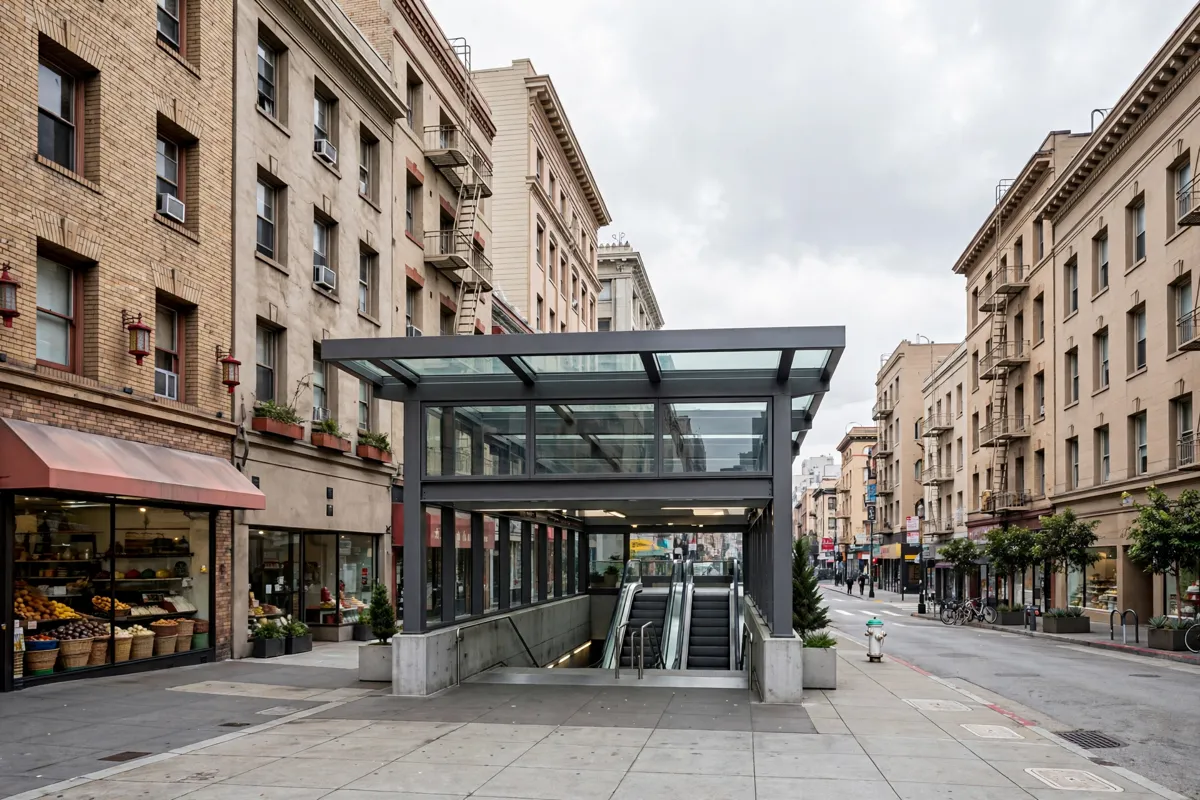
Arriving in Chinatown
For more context on the starting area, read this Nob Hill neighborhood guide.
From Nob Hill Hotel, walk about 18 minutes to Chinatown-Rose Pak station, then head to Dragon’s Gate at Grant Avenue and Bush Street to begin exploring.
Chinatown covers about 30 square blocks, bounded approximately by Bush Street to the south, Broadway to the north, Kearny Street to the east, and Powell Street to the west. Follow Grant Avenue into the neighborhood.
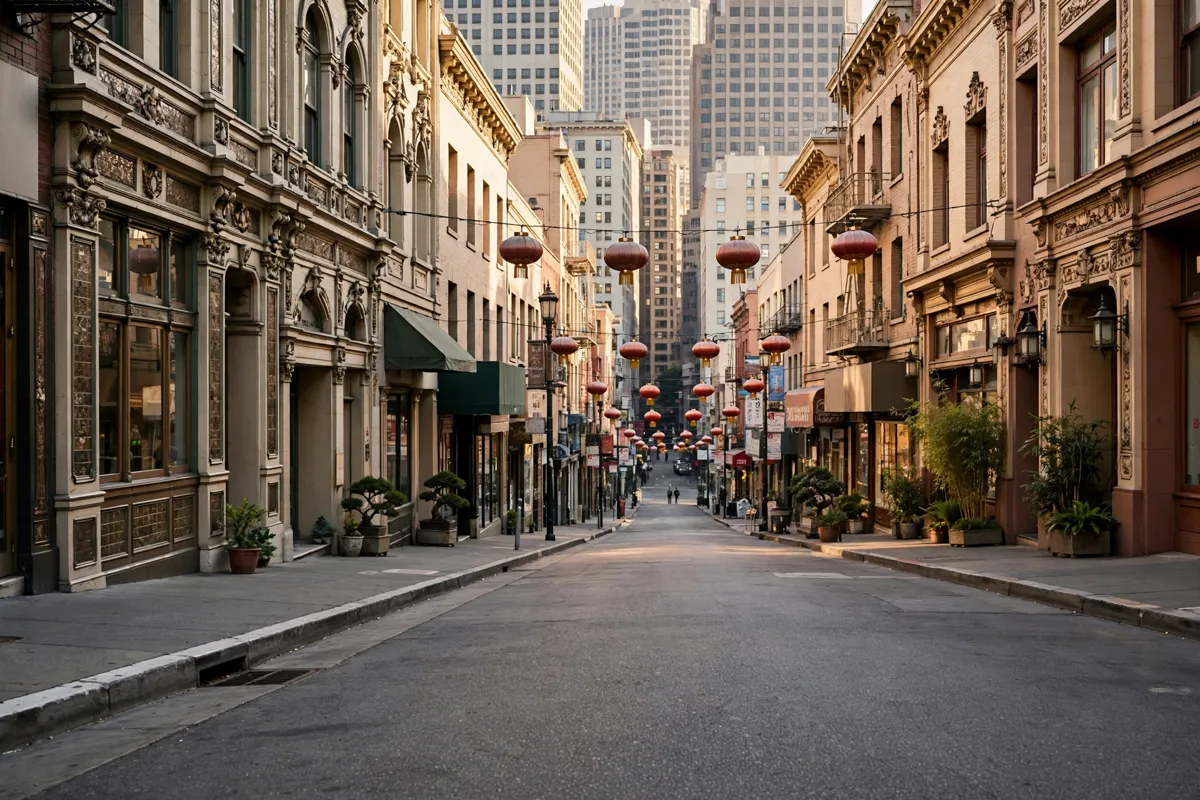
Grant Avenue and Stockton Street
Grant Avenue and Stockton Street are Chinatown’s two main commercial corridors, with their busiest stretch typically during the day and early evening. Grant Avenue is known for ornate architecture and traditional lanterns, while both streets offer a way to take in the neighborhood’s shops and street life.
Hours vary by business, so check the official site before you go if you’re planning a shopping stop.
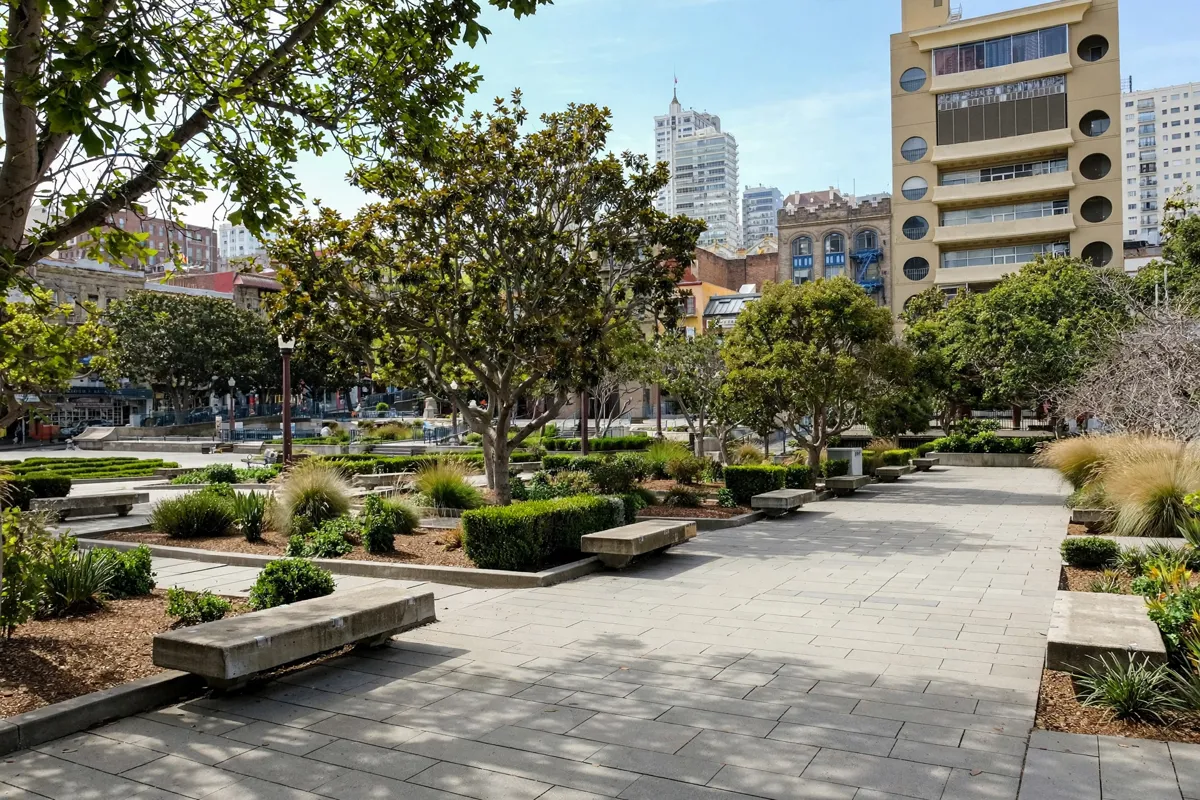
Cultural Landmarks and Community Spaces
Portsmouth Square, the Chinese Historical Society of America Museum on Clay Street, and the Chinese Culture Center offer different ways to connect a walk with Chinatown’s public and cultural spaces. The Chinese Culture Center is free.
Chinatown is North America’s first and largest Chinatown. Founded in 1849 during the Gold Rush, it was rebuilt after the 1906 earthquake. Its history is part of the context for the neighborhood’s streets and community institutions.
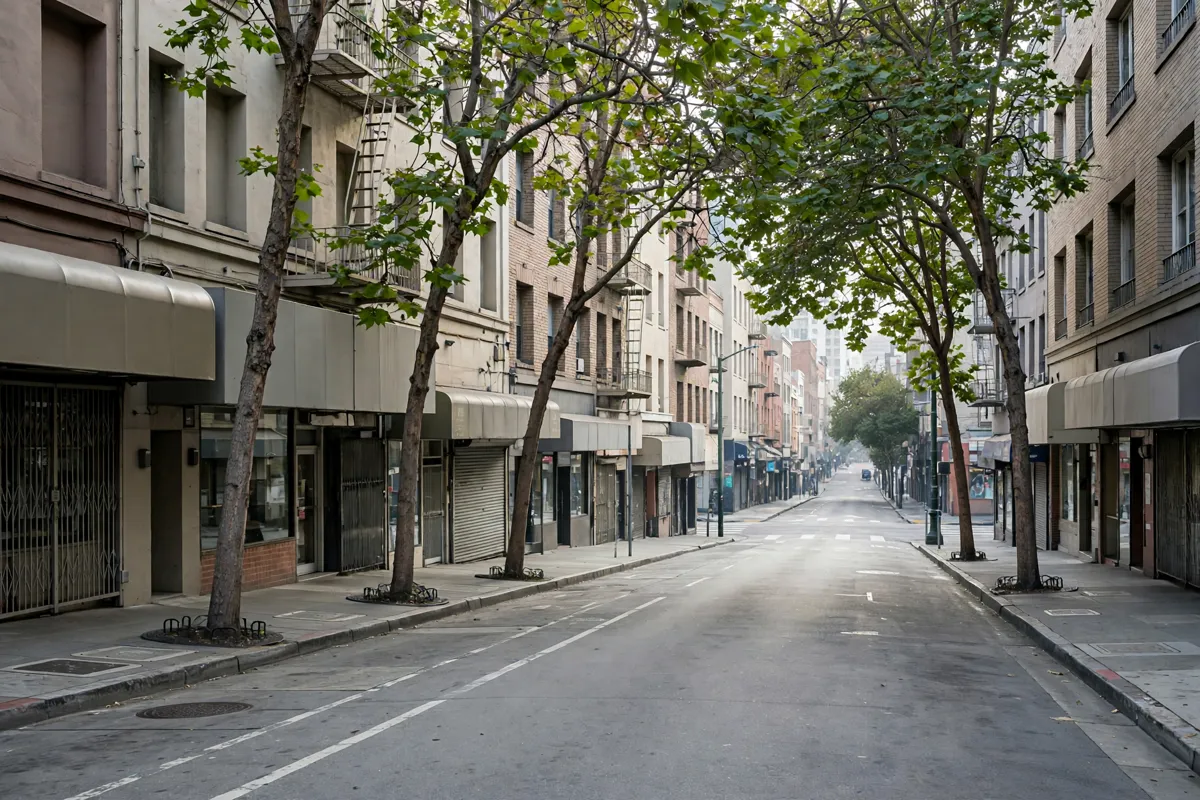
Food Stops and Market Streets
Grant Avenue and Stockton Street are the main corridors to explore for restaurants, shops, and markets.
All three cable-car lines connect Chinatown with visitor hubs including Fisherman’s Wharf, Union Square, and the Embarcadero. The Central Subway Line also has a Chinatown stop. You can plan a broader city itinerary with this guide to getting around San Francisco by public transport.
Visiting Respectfully and Checking Access
Chinatown works well as part of a walking visit that also includes North Beach or the Financial District. For another city stop, Union Square San Francisco can be combined with the neighborhood in a broader visit.
FAQs
Where does a Chinatown walk begin?
Dragon’s Gate, at Grant Avenue and Bush Street, is Chinatown’s main entrance and a clear starting point for a walk along Grant Avenue.
Which streets are Chinatown’s main commercial corridors?
Grant Avenue and Stockton Street are the neighborhood’s two main commercial streets.
Can Chinatown be combined with another neighborhood on foot?
Yes. Chinatown can be combined with a walking visit to North Beach and the Financial District.
What is Chinatown’s historical background?
Chinatown was founded during the Gold Rush and rebuilt after the 1906 earthquake.